This is a somewhat rare case on this blog (and in my life) – I am making a food that I have never tried before!! In my 26 years, I have never had a lima bean. They’re pretty hard to find – the only store I could find that sold them was Walmart – and I think that may be due to the fact that a lot of people really really hate them. My mom is one of those who very much hates lima beans! I have never heard her go on so much about how much she hates a food. It came up in conversation when my uncle was visiting, and the the way he talked about them as well was comical – he said they taste like “barf.” And I know he has a big vocabulary, so if that’s the best word he could think of, it is likely a spot-on descriptor.

My mom and uncle eviscerating lima beans felt like a challenge. I mean, what a way to throw down the gauntlet: “can you make this food not taste like barf?”
Hearing these two open-minded, intelligent adults hating a bean so much that they haven’t eaten them in decades made me decide I needed to try lima beans! But since they are pretty uncommon, and because I’ve never made or eaten them before, I felt I should start at the beginning. I want to try them as plain as possible, to see what the deal was. And I want to try them doctor-ed up, to see if I can find a version that my mom deems edible!

My biggest exposure to lima beans comes from A Bad Case of the Stripes. For those unfamiliar, it is a children’s book in which a girl refuses to eat her lima beans at dinner. The next day, she wakes up covered in stripes, and everyone makes fun of her at school. She has to start staying home from school, somehow unable to leave her bed, while doctors examine her to try and figure out what’s wrong. Her stripes start randomly changing patterns, and there’s seemingly no end in sight. Then, one day, she eats her lima beans with dinner. And voila! No more stripes!!
Talk about a way to add intrigue to lima beans. They’re a miracle cure to a miracle disease. Clearly another one of those notoriously hated vegetables. And yet, I’ve never had them!
When I was a kid, I asked my mom to make Brussel sprouts because I had never had them. They were something I had read and heard about plenty of times, as they were a frequently disparaged in books/pop culture (much like lima beans in that book). And my mom never made them because she hated them! So I needed to try them for myself. My mom made boiled Brussel sprouts with cheese, and honestly, I did not hate them! They weren’t bad. They didn’t launch to my favorite vegetable (which is just as well, because my mom was not going to keep making them), but I didn’t understand why they were notoriously loathed by so many children. Canned green beans were far worse, in my opinion.
But flash forward a few years, and my family was out to eat at a fancy restaurant in Santa Barbara. And on the menu… roasted Brussel sprouts! We ordered them for the table, and they were incredible. All of our raving about them convinced my mom to try them, and she could hardly believe it. They didn’t taste a thing like the Brussel sprouts of yore. Turns out, roasting vegetables in a whole lot of fat and seasoning is a lot better than boiling!
This NPR article describes a childhood hatred of lima beans that gets converted by a single restaurant dish. Much like my mom was converted to Brussel sprouts! This article also gets into a bit of the variety of lima beans – there’s a lot of variation. The most common limas are apparently Fordhooks – they are pale green and slightly larger. There’s also baby lima beans, which are “smaller, less starchy and more delicate tasting.”
Then there’s also butter beans, which are a variation of lima beans that are beige, and larger, and apparently a more mature version of the bean. But some regions call all lima beans butter beans. There is alarmingly little clarity on lima beans on the internet! This Taste of Home article says that lima beans and butter beans are the same, and also says that, “Butter beans are a common moniker for the group of beans known as lima. You might think lima beans are those green monsters from childhood dinners with a bad rap, but lima beans cover a whole range of colors along the beige and pale green spectrum… their size range includes everything from the diminutive black-eyed pole lima to the gigantes.”
Wikipedia offered some new levels of confusion, but also some help:
The term “butter bean” is widely used in North and South Carolina for a large, flat and yellow/white variety of lima bean… In the United States, Sieva-type beans are traditionally called butter beans, also otherwise known as the Dixie or Henderson type. In that area, lima beans and butter beans are seen as two distinct types of beans, although they are the same species… In culinary use there, lima beans and butter beans are distinct, the former being small and green, the latter large and yellow. In areas where both are considered to be lima beans, the green variety may be labeled as “baby” (and less commonly “junior”) limas.
I just wanted a clear answer on what lima vs. butter beans were – if butter beans were a different strain of lima, or a more mature version of the same kind of bean. I didn’t foresee this question having regional linguistic and also botanical roadblocks to my understanding. But from what I have gathered, butter beans are varieties of the same species of bean. The smaller green variety are often called “baby lima beans,” and the other are butter beans. At least where I am regionally, they are called two different things.

Now… long and confusing backstory sort of covered, I got to work. At Walmart, I got frozen baby lima beans. I also got cans of butter beans. As well as canned “seasoned lima beans.” Somehow, these are all the same bean but also different beans.
You can also buy dried lima beans. Those just appear to be butter beans, but they are labeled as “large lima beans.” But I tried to cook those, and I was not entirely sure I did it right. So I’m skipping those. For now!
I wanted to try these beans as plain as they come, but also… I want them to be tasty, to see if I can convert my mom. So I landed on making them “alla vodka.” I figured vodka sauce is very basic and unassuming, so it won’t hide the flavor of the beans entirely, but it can certainly elevate them beyond just… boiled.
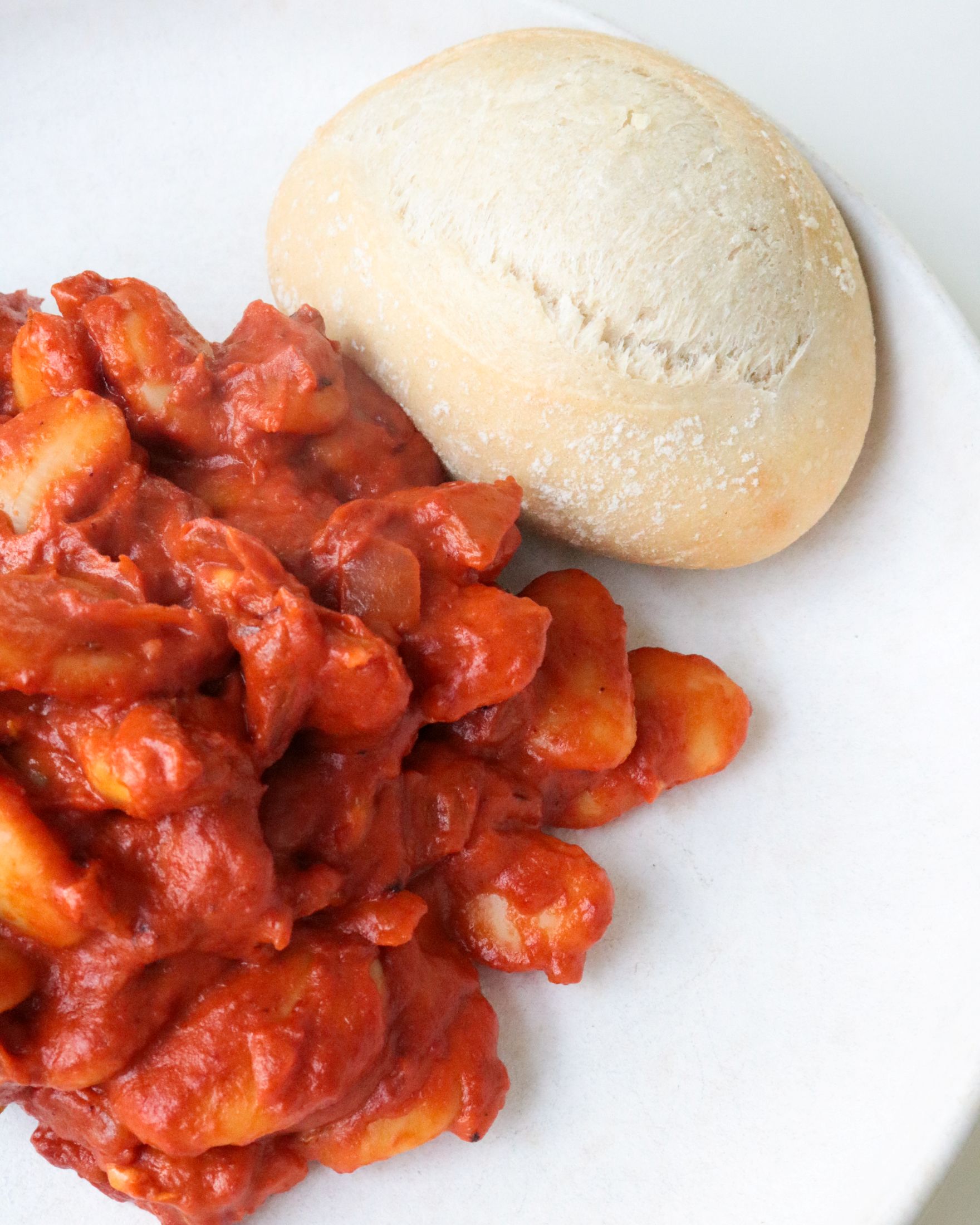
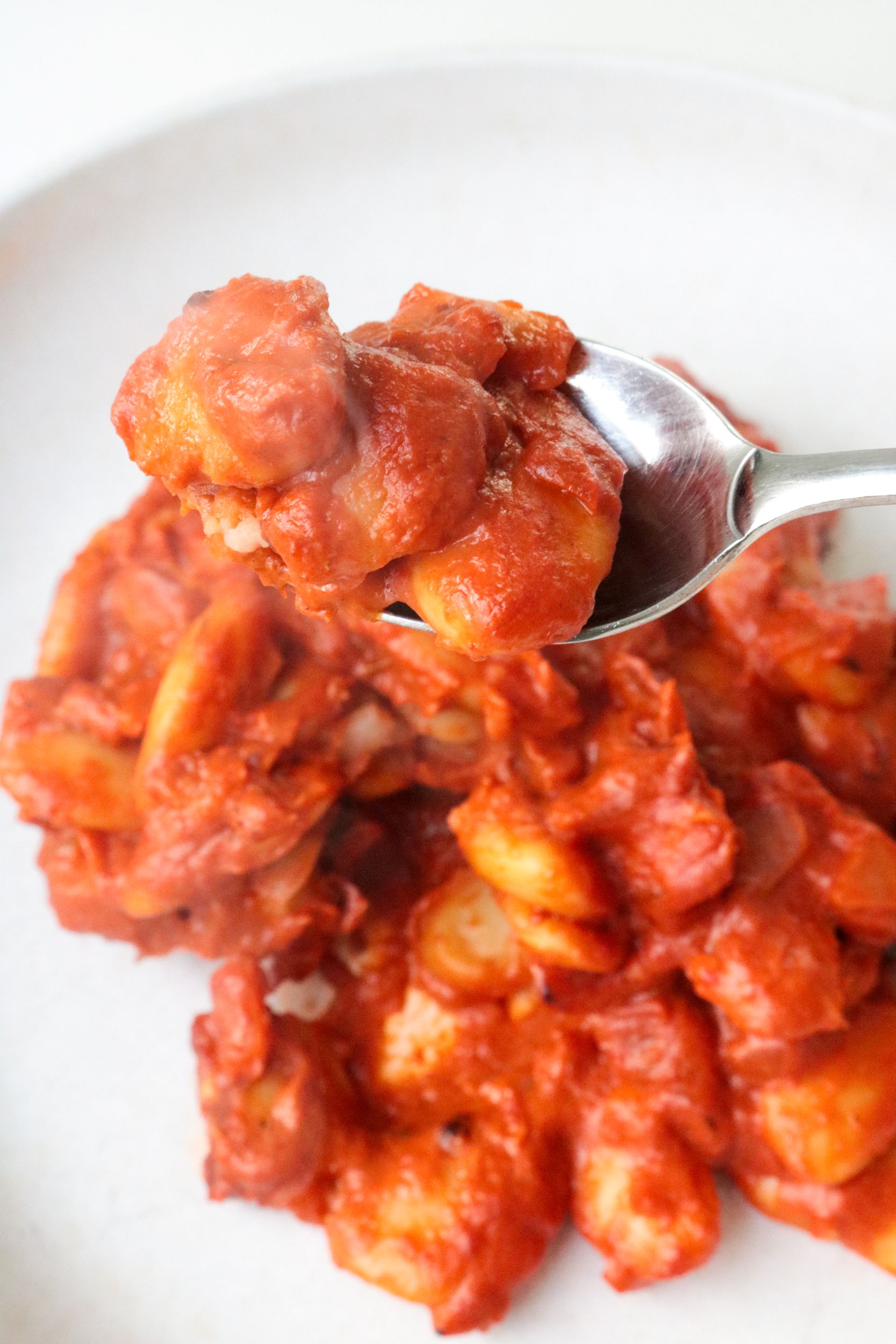
This will have to turn into a short series on lima beans, because I have the other version of limas to try. But for now, I would say that these definitely did not taste like barf. And I promise I’m not just saying that. The butter beans had very little flavor, and they had a great texture. A very melt-in-your-mouth feeling that likely led to the name.
But perhaps the worst ones are the baby green ones? They are what I think of when you say “lima bean,” and probably what my mom hates. So I will need to try those next. I’ll try them plain with butter or something, and then see if I can doctor them up.
My conclusion for now is that maybe lima beans just need a new PR rep. They should get in contact with the Brussel sprout PR team. Or at least try and nail down what the heck they actually are.
Print
 Print
Print Pin
PinIngredients
- 1/2 tablespoon unsalted butter
- 1 shallot diced
- 2 garlic cloves, minced
- 2/3 cup (one 6oz can) tomato paste
- 50ml (3 tbsp) vodka
- 1/4 cup water or broth
- 1/2 cup heavy cream
- 1/3 cup finely grated parmesan cheese, plus more for topping
- 2 cans butter beans, drained and rinsed
- 1/4 cup shredded mozzarella or provolone cheese
- Crusty bread, for serving (optional)
Instructions
- Heat the butter in an oven-safe skillet or dutch oven over medium-low heat. Once melted, stir in the shallots and garlic with a big pinch of salt and pepper. Cook, stirring often, until the shallots soften, about 5 minutes. Add in the tomato paste and stir, cooking for 5 minutes. The color will darken – this is where the flavor is!
- Stream in the vodka and stir, scraping the brown bits and flavor from the bottom. Stir in 1/4 cup of water. Stir in the heavy cream and parmesan, stirring until the cheese melts. Taste and season the sauce with more salt and pepper if needed. You can also stream in a bit more water here if you want it slightly thinner!
- Add the beans to the sauce and stir gently to combine. Top with the cheese.
- Turn on the broiler. Place the pan directly under it and cook for 2 to 3 minutes, or until the cheese is golden and bubbly.
- Remove the pan from the oven and top with extra parmesan cheese if desired. Serve with crusty bread.
Notes
Adapted from How Sweet Eats